📌 Key Takeaways
Proper air conditioner maintenance is essential for safe, efficient, and reliable performance throughout the year. Regular filter changes, airflow checks, coil cleaning, and professional inspections can help prevent health hazards, electrical fires, costly repairs, and energy waste. Homeowners can handle basic maintenance, while refrigerant, electrical, and complex repairs should be left to certified HVAC professionals. Following a consistent maintenance routine helps extend your AC system’s lifespan, improve efficiency, and maintain a comfortable indoor environment.
We must all thank the American engineer Willis Carrier, who invented the first modern electric air-conditioning unit in 1902. It keeps our living spaces survivable in the scorching heat of the summer and keeps us warm during the winter. However, once these AC units are installed, they are rarely given a second thought until a total failure occurs. These failures are often caused by failure to comply with air conditioner safety, costing you a fortune in energy bills and repair costs while hitting your bottom line by producing hazardous living conditions.
A properly maintained HVAC system creates a healthy living space for you and yours, but if you fail to maintain your HVAC system, it becomes harmful and exposes you to dangerous gases as well as fires.
Think about the importance of your air conditioner to you and your family members, and look at ways to keep your air conditioner in good condition.
Importance of Air Conditioner Safety
An air conditioner acts as the lifeblood of a comfortable home. It keeps the air you breathe clean and the temperature safe. Ignore the maintenance of an AC system, and you are inviting three major issues.
- Health Hazards: A dirty AC system can grow mould and bacteria in its filter, which then enter your rooms when air is blown. Apart from this, the AC system shares its ductwork with a furnace. If the overall system is neglected, heating components could leak Carbon Monoxide (CO) and other volatile organic compounds (VOCs), which are deadly gases causing allergies and illnesses like asthma and flu.
- Fire Risks: If air conditioning inspections are ignored over a long term, its internal wires can get loose. These faulty wires and overheating parts are leading causes of fires. Dust and oil build up inside the AC unit, which acts as fuel if an electrical spark occurs.
- Financial Impact: There is a direct link between poor care and energy wastage in an AC unit. When the unit is dirty and clogged, it works harder to produce less impact. This results in much higher power bills and the breaking of expensive parts like the compressor years before they should.
A government statistic argued that every dollar spent on maintenance of an AC system yields $4 in savings by avoiding costs of future repair or replacement of systems.
AC Maintenance Tips for Safe Operation
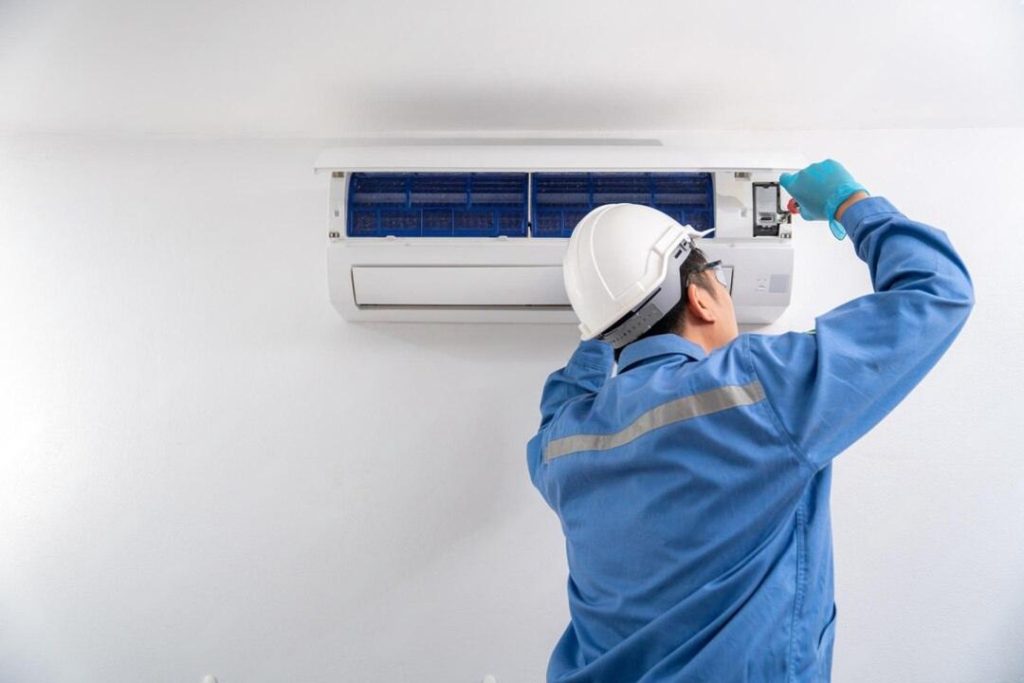
While the AC unit is a complex machine, air conditioner safety is not difficult, time-consuming, or expensive. Homeowners can easily prevent the high costs of emergency HVAC repair by taking out 10-15 minutes per month.
Conduct these easy maintenance checks on your air conditioners to help extend the life and efficiency of your unit.
- Maintain your Filters: Always change your filters monthly or bi-monthly. Clogged filters hinder airflow, resulting in an increased load on your system, causing inefficiency. Such wastage of energy will cause early failure of the motor or compressor, costing you hefty charges.
- Airflow Management: Allow airflow by ensuring that the interior doors are kept open. Moreover, ensure that the exterior parts are also free of debris such as twigs, grass, and leaves. Clearing these obstructions will allow better airflow.
- Sensor Check-Up: In central air conditioners, avoid exposing your thermostat to the sun because it may give you wrong signals due to “false readings.” In window air conditioners, check that the sensor behind the control panel is near but does not touch the cooling coil.
- Check the coils of your AC systems: Conduct gentle brushing and cleaning of the coils. This is necessary because a fouled evaporator or condenser coil drastically reduces heat-absorbing capacity.
Affordable air conditioning maintenance often begins with safety. Operating a clean system reduces friction, which prevents motors from overheating, mitigating fire risks while simultaneously cutting cooling costs.
Evolution of AC Maintenance
AC maintenance has evolved over time. The evolution of maintenance has undertaken 3 crucial phases. Understand these maintenance models to decide how and when you want to call a professional.
Phase 1: Reactive Maintenance
Reactive maintenance occurs when repairs are only addressed after an AC component breaks or the system stops working. It often leads to high stress, extended downtime, and expensive emergency repair costs. For homeowners facing an unexpected repair bill, AC repair financing may provide a flexible way to manage the cost, but proactive maintenance remains the more efficient approach for avoiding major expenses.
Phase 2: Preventive Maintenance
Preventive maintenance is carried out based on pre-decided calendar dates. Here, a scheduled filter change and seasonal tune-ups are conducted. This is a great way to keep your AC unit running smoothly. However, it runs the risk of over-maintaining or missing off-schedule anomalies.
Phase 3: Predictive & Reliability-Centred
With proper data collection in smart air conditioning systems, data-driven decisions can be made to identify potential issues and schedule maintenance when needed. This approach can also help determine when air conditioning installation or system upgrades may be more beneficial than continuing to repair an aging unit. By using sensor data, oil analysis, and performance trends, homeowners can improve efficiency, safety, and overall equipment lifespan.
What Does Professional AC Maintenance Include
With their knowledge and special equipment, professional technicians are able to detect any problems that might have remained undetected by someone without adequate knowledge of AC repair. Professional technicians do full checks on machines to make sure everything works as it should.
The Professional Maintenance Checklist
| Action Taken | Safety/Efficiency Impact |
| Refrigerant Level Check | Technicians fix leaks and set the “correct charge.” This protects the environment and ensures the air stays cold. |
| Electrical Inspection | Checking fuses, breakers, and wires prevents “electric control failure” and stops fires before they start. |
| Drainage Flush | Technicians flush drains with bleach and water to stop clogs and mold. Clogs are very common in humid weather. |
| Coil Cleaning | Cleaning the cooling coils prevents the compressor from failing. This stops the most expensive part of the AC from breaking early. |
Standard yearly checks are helpful, but “Predictive Maintenance”—using data to fix only what is actually worn out—can provide a 10-times Return on Investment (ROI). This means for every dollar spent on smart maintenance, you save ten dollars in energy and repair costs.
While this guide can provide you with the confidence to get up and conduct a full-fledged yearly AC maintenance, respect the boundary. An untrained homeowner can only do so much to prevent the air conditioner from malfunctioning. But if the air conditioning service has been denied for years, it is in your best interest to invite a professional HVAC repair company.
Know the Boundaries
| Task | Safety Risk Level | Best Suited for | When to Act |
| Changing Air Filters | Low | Homeowner | Airflow feels weak or dusty |
| Clearing Outdoor Debris (2ft Radius) | Low | Homeowner | Overgrown Shrubs or Post-storm Debris |
| Unclogging Condensate Drain | Medium | Homeowner | Water pooling around indoor unit, water dripping from ceiling/walls, or AC automatically shutting |
| Checking/Recharging Refrigerant | High (Toxicity Risk) | Certified Technician | Hissing sounds, ice on refrigerant lines, or warm air blowing |
| Electrical Diagnostics | High (Shock Risk) | Certified Technician | System Short-cycles, breakers trip, or won’t turn on |
| Deep Coil Cleaning | High (Fins easily damaged) | Certified Technician | Spiking energy bills, units runs constantly. |
If you are an untrained professional trying to enter the High-Risk zone without proper OSHA/EPA training, you are inviting electrocution, chemical exposure, and voided warranties.
We have a 5-step air conditioner safety protocol that every person trying to conduct yearly AC maintenance must follow. This protocol is the foundation of how to clean air conditioner units safely.
5-Step Air Conditioner Safety Protocol
Step 1: Cut the Power
Always turn off the system at the thermostat, the outdoor power cutoff, and the breaker box.
Step 2: Gear Up
Wear safety glasses, insulated gloves and a dust mask before opening up your HVAC system.
Step 3: Clear the Zone
Ensure no children, pets, or tripping hazards are near the air conditioning units.
Step 4: Use the Right Tools
Gather soft bristle brushes, fin combs, and mild cleaning solutions before starting.
Step 5: Never Force it
If a part resists or stops. Do not pry, bend, or force the mechanical component.
Conclusion: Ensuring Long-Term Air Conditioner Safety
Upholding your home and air conditioner safety is a shared responsibility. As a consumer, you handle the filters and the area surrounding the unit, while a technician ensures the internal electrical and mechanical parts.
The bottom line;
- Defend the Airflow by replacing a filter with a MERV rating of 1 to 12, depending on your system’s capacity.
- Protect the Condenser by clearing the nearest 2-foot area.
- Clear the Condensate Line every few months with white vinegar or a bleach and water solution.
Remember, Air conditioner safety and efficiency are indistinguishable. Proper maintenance of an AC system prevents electrical fires and reduces electrical friction. Set your thermostat one degree higher to save up to 3% on cooling costs. Lastly, call a professional HVAC repair company if you find any high-voltage boundary.
FAQs
How often should I go for yearly AC maintenance?
The ideal routine for maintenance service is the Spring and Fall approach. This entails having the cooling systems tested and maintained in Spring, just before the onset of summer, and in Fall before winter kicks in.
Why is air conditioning inspection necessary?
Early detection is important. A professional can find a “hidden failure,” like a leaking point or a loose connection, before it breaks down your AC, causing a loss of cooling ability.
What happens during a professional air conditioning inspection?
Technicians use a checklist to check the levels of refrigerant, corrosion on the wiring, cleaning of the coils to ensure that mould does not form, and also draining the drainage lines.
How does regular AC maintenance improve energy efficiency?
A clean AC moves air more easily, increasing energy efficiency. This can lead to 5% to 20% savings in the monthly cost of operating.
Can voltage fluctuations damage an air conditioning system?
Yes. On very hot days, power changes can cause “tripped high-pressure limit switches” or flip your circuit breakers. If your AC stops on a hot day, it is often because of these safety switches.
What is the safest temperature setting for efficient AC operation?
The best way to do that is by using a “programmable thermostat”. You can make your thermostat adjust according to the activity at your place, making you save 5%-20% of your energy bills.
What makes Cunningham AC, Heat & Propane technicians reliable?
Cunningham’s AC technicians possess the necessary certifications, experience, and equipment to diagnose your heating and cooling system accurately.
Why is Cunningham AC, Heat & Propane a trusted HVAC service provider?
Cunningham AC, Heat & Propane provides a satisfaction guarantee on HVAC repairs, giving you confidence in our work. If the customer is even slightly unsatisfied, we provide additional repairs at no extra cost.