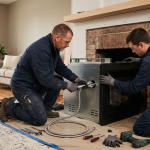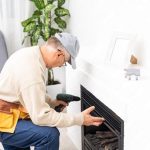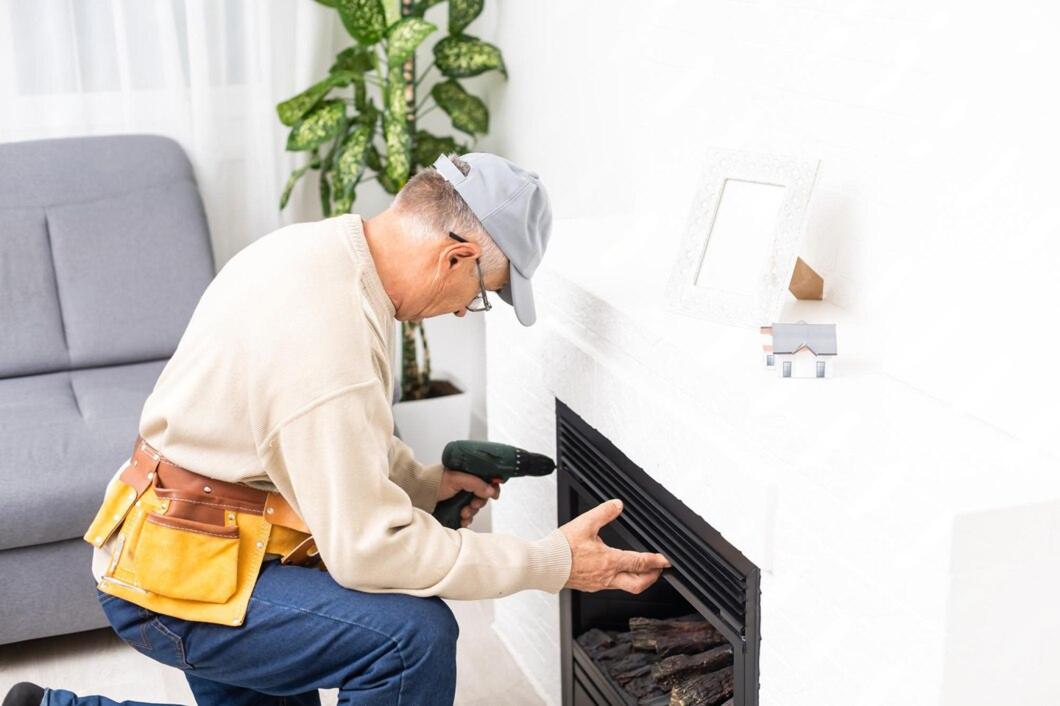
Electric fireplace repair usually turns out simpler than it sounds, mainly because these units break down far less than gas or wood-burning fireplaces to begin with. Most problems trace back to something small – a tripped breaker, a dusty sensor, dead batteries in the remote – rather than a unit that’s actually failing for good. Knowing which issues take five minutes to fix and which ones need a technician saves both money and a fair amount of unnecessary stress.
What follows covers the issues that show up most, what usually causes each one, and where a safe DIY fix ends and a professional call should start.
Common Electric Fireplace Problems and Their Causes
Most problems fall into a short list of repeat offenders. Learn the pattern once, and diagnosing gets a lot faster the next time around.
Flame Effect Not Working
Heater’s running, but the flame display isn’t – that’s almost always the flame bulb or the LED strip behind the panel. These wear out with regular use, faster in units that run daily. A dim or flickering flame, rather than one that’s gone dark entirely, usually points to a loose connection instead of a dead bulb.
No Heat, But the Flame Still Works
The heating element or the thermostat sensor is behind this almost every time. Enough dust piles up around the sensor, and it starts reading the room as warmer than it actually is, so the unit just quits heating – meanwhile the flame effect keeps going, completely oblivious.
Unit Won’t Power On at All
Check the boring stuff first. A tripped breaker, a loose plug, a dead outlet – these cause more “broken” fireplaces than actual internal failure does. Test the outlet with another device before assuming the worst. Works fine? The problem’s inside the unit.
Strange Noises During Operation
Fan motor’s the usual suspect behind any humming or buzzing, and half the time it’s just dust or debris caught on the blades doing it. Clicking is a different story. That one generally means something’s worked itself loose inside – not dangerous on its own, but worth a look before it turns into something that is.
Remote Not Responding
Almost embarrassingly simple, most of the time. Dead batteries, a dusty sensor eye, or interference from something else nearby covers the vast majority of remote complaints. Worth ruling out before assuming the control board’s shot.
Types of Fireplaces
Not every fireplace works the same way underneath, and knowing which type you own changes both how you troubleshoot and what a repair actually involves.
An electric unit runs on a heating element behind an LED or holographic flame display; nothing about it involves real fire or venting of any kind. Gas fireplaces are a different animal – actual combustion, natural gas or propane, which means proper venting and a professional needs to check on it more often. Then there’s wood-burning, the original version of all this: a chimney to maintain, regular cleaning, and honestly more hands-on work than the other two combined.
Electric units are generally the easiest to work on yourself, mostly because there’s no combustion or gas line in the mix. Still, electrical components carry real risk if you’re careless with them, and that’s exactly why some fixes, even on a simple electric unit, are better left to someone trained for it.
How to Fix Electric Fireplace Problems Safely
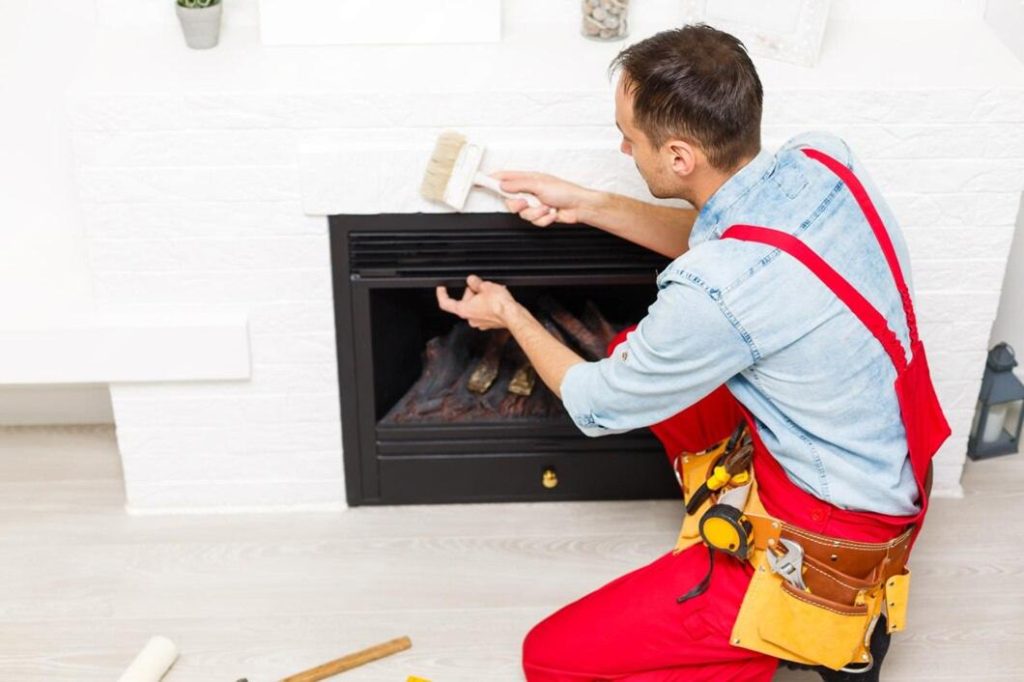
Unplug the thing completely before touching anything inside it. Sounds obvious, gets skipped constantly, and it’s genuinely the most important step in any electric fireplace repair you’ll do.
Fixing the Flame Effect
Pop off the front panel, usually a few screws or clips, and take a look at the flame bulb or LED strip. Bulb’s visibly dead? Swap it using the exact part listed in your manual, nothing generic. While you’re in there, check for loose wiring too, since a shaky connection causes flickering just as often as a burned-out bulb does.
Sorting Out Heating Problems
Start by cleaning the intake and outtake vents. Dust buildup is the number one cause of heating trouble, and a vacuum with a brush attachment fixes it more often than you’d think, without touching anything else. Still no heat after cleaning? The thermostat sensor or heating element probably needs a professional’s attention at that point.
Dealing With Power Failures
Breaker panel first, always. Reset it if it’s tripped, then test the outlet with a different device to rule out a wiring problem on your home’s end rather than the fireplace itself. Outlet’s fine but the unit still won’t turn on? An internal fuse has likely blown, and that usually calls for a technician.
Quieting Down Unusual Noises
Power down first, give it time to cool off completely, then get the panel open. A blast of compressed air or a soft brush clears out whatever dust has settled around the fan. Still noisy after that? Probably the fan motor itself, and swapping that out isn’t really a weekend DIY situation for most people.
Electric Fireplace Maintenance Tips to Prevent Repairs
A bit of regular upkeep heads off most of what’s covered above before it ever turns into an actual repair.
- Dust the vents and flame display monthly – buildup causes more trouble than any single mechanical failure ever does
- Check the power cord now and then for fraying, especially if the unit gets moved or repositioned often
- Skip running the heater on the highest setting constantly, since that shortens the heating element’s lifespan faster than moderate use would
- Keep curtains, furniture, or anything else that blocks airflow away from the vents
- Get a professional inspection every year or two, even when nothing seems off, since some wear doesn’t show from the outside
Regular electric fireplace maintenance costs a fraction of emergency repair, and it tends to add real years onto how long a unit lasts before replacement becomes the only option.
Conclusion: Keep Your Home Warm with Effective Electric Fireplace Repair
Most electric fireplace problems trace back to dust, a loose connection, or a basic power issue rather than anything catastrophic under the hood. A bit of troubleshooting, combined with routine maintenance, keeps most units running well past what people expect going in. When something goes beyond a simple fix, though, paying a professional is worth it, particularly anywhere electrical components or internal wiring are involved.
Frequently Asked Questions (FAQs)
How much does electric fireplace repair typically cost?
Minor fixes, like a bulb swap or a good cleaning, cost next to nothing beyond the replacement part itself. Anything involving the heating element or internal wiring runs higher, often somewhere between 100 and 300 dollars depending on what’s wrong.
What are the most common electric fireplace problems?
Flame effect failures, heating issues from dust buildup, and unresponsive remotes make up most of what technicians see. Power problems, tripped breakers, and blown fuses especially come up often too.
How can I extend the lifespan of my electric fireplace?
Regular dusting, easing off the highest heat setting, and the occasional professional inspection all go a long way toward extending how long a unit actually lasts.
When should I replace instead of repair an electric fireplace?
Once a unit’s past eight or ten years and needs a costly internal repair, replacement usually makes more financial sense than patching an aging fireplace piece by piece.
Is professional electric fireplace repair worth it?
For anything touching internal wiring, the heating element, or a persistent electrical issue, yes. A professional repair almost always costs less than the risk of a DIY mistake around live electrical components.